Why Research Culture Is the Missing Ingredient in Most Startup Ecosystems
Startups are often told to move fast. But speed without understanding can simply mean getting to the wrong solution faster.
Sep 30, 2026·8 min read
 8 min read
Walk into almost any startup ecosystem today and you will hear familiar language: build, launch, iterate, scale. Founders are encouraged to move quickly, ship MVPs, attract users and chase growth. Hackathons reward prototypes. Incubators ask about traction. Investors want to know how large the market could become.
All of this matters.
But there is another question that often gets less attention:
How well do we understand the problem we are trying to solve?
That is where research comes in.
Research is not just something universities do before publishing papers. For startups, it can mean talking to users, studying existing solutions, examining market behaviour, testing assumptions, understanding regulations, analysing data and asking uncomfortable questions before committing significant time and resources.
And in many emerging startup ecosystems, developing this habit could make the difference between simply producing more startups and producing better ones.
1. Building Faster Does Not Always Mean Building Better
The startup world has developed a strong attachment to speed. “Move fast” sounds sensible, and often, it is. The problem comes when speed becomes a substitute for understanding.
A team can build an impressive product in a few weeks and still discover that the problem is not significant enough, the intended users do not behave as expected, or an existing solution already addresses the need. The issue was not necessarily execution. The issue was that the team started building before asking enough questions.
Research creates a pause between having an idea and committing to it. That pause is valuable. It gives founders an opportunity to test whether the problem exists, who experiences it, how they currently solve it, what those solutions cost and what would make them change their behaviour.
The goal is not to eliminate uncertainty. It is to reduce avoidable uncertainty.
2. Research Turns Assumptions Into Questions
Every startup begins with assumptions. A founder may believe that a particular group of people has a specific problem, that the problem is painful enough for them to pay for a solution, that users will change their current behaviour, that a particular technology can solve the problem, that the market is large enough, or that existing solutions are inadequate.
Some assumptions will be correct. Others will not. Research gives founders a structured way to find out.
Instead of saying, “People need this,” a research-oriented founder asks: Who exactly needs it? Instead of saying, “Businesses will pay for this,” they ask: How are businesses currently paying to solve the problem? Instead of assuming that a technology is useful because it is new, they ask: Does this technology produce a meaningful improvement over what already exists?
Those questions may sound simple, but they can completely change what gets built.
This is particularly important in technology. The availability of a new technology does not automatically create a reason to use it. AI is a good example. The ability to build an AI-powered product is no longer the difficult part. The more important question is whether AI meaningfully improves the way a particular problem is solved.
That is why a problem-first approach matters.
3. The African Startup Context Makes Research Even More Important
For African founders, context matters. A solution that works in Silicon Valley, London or Singapore cannot automatically be transplanted into Lagos, Nairobi, Accra or Kigali and expected to behave the same way.
Markets differ. Infrastructure differs. Regulations differ. Languages differ. Purchasing power differs. Consumer behaviour differs. Trust differs. Distribution channels differ. Even within the same country, different communities can experience the same problem in very different ways.
Consider something as seemingly straightforward as digital payments. The technical product may be one part of the challenge. Connectivity, trust, transaction costs, financial habits, merchant behaviour and regulatory requirements can all influence whether the product actually works in practice.
The same principle applies to AI products. Building an AI solution for African businesses requires more than simply adapting an existing model. Founders need to understand the workflows, data availability, infrastructure constraints, budgets and specific industry problems that shape how businesses actually operate.
Context is not a footnote to product development. Context is part of the product.
4. Research Should Not End When the Product Launches
Another misconception is that research is something founders do at the beginning and then leave behind. In reality, research should continue throughout the life of a product.
After launch, teams can investigate why users are dropping off, which features are actually being used, what problems users are solving differently from what the team expected, why some customers are adopting the product while others are not, what competitors are doing differently, what has changed in the market, and what new regulations or technologies could affect the business.
This creates a feedback loop: research, build, test, learn, improve, research again. That loop is especially important for startups operating in rapidly changing markets.
For RIL, this way of thinking connects directly to how builders should approach experimentation. A prototype should not simply be the end product of a workshop or challenge. It should become an opportunity to observe, test and learn.
The question after a demo should not only be, “Does it work?” It should also be:
What did we learn from watching someone use it?
5. Research Culture Is Bigger Than Hiring Researchers
When people hear “research culture,” they may imagine a company filled with researchers and analysts. That is not necessarily what it means.
A research culture is a habit of asking questions before making assumptions. It can exist in a two-person startup. A product designer can interview users. A developer can investigate how a technical problem occurs in the real world. A marketer can study why a campaign worked with one audience and failed with another. A founder can spend time observing how customers actually work instead of relying entirely on what they say in a pitch meeting.
The important thing is not the job title. It is the behaviour. A research culture encourages teams to say:
We don’t know yet. Let’s find out.
That mindset can be incredibly powerful. It also changes the relationship between failure and learning. A founder who discovers that an assumption was wrong has not necessarily wasted time. They have gained information that can influence the next decision.
6. It Can Also Improve the Startup Ecosystem Around the Founder
The benefits of research do not stop at individual startups. A stronger research culture can influence incubators, accelerators, universities, investors, innovation hubs and government programmes.
Instead of measuring ecosystems primarily by the number of startups created, programmes can also ask what problems these startups are solving, how much customer discovery they have conducted, what evidence supports the opportunity, what they have learned from failed experiments, what local data informed the product, and whether founders are documenting what they discover.
This changes the incentives. It moves the conversation from “How many startups did we produce?” toward “What are these startups learning, building and contributing?” That is a more useful question for an ecosystem trying to mature.
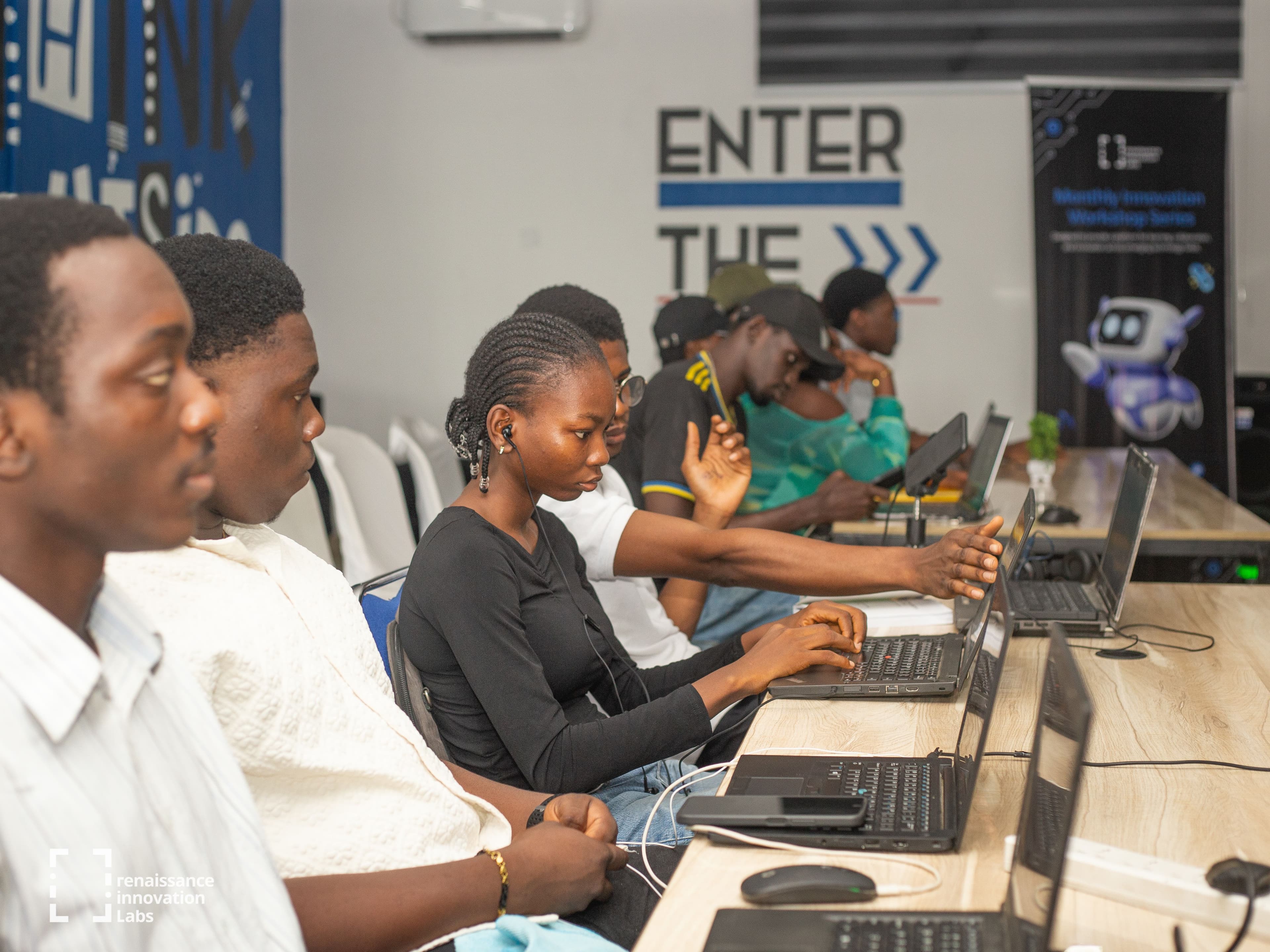
For innovation spaces like RIL, this also creates an opportunity to build something beyond individual programmes: a culture where knowledge from workshops, experiments, product tests and founder experiences becomes useful material for the next person who walks through the door.
7. Failure Can Become More Useful When It Produces Knowledge
Startups will fail. Research does not change that. But it can change what failure produces.
A startup that discovers after spending two years building a product that customers do not want has learned something, but at a significant cost. A startup that discovers the same issue after twenty customer interviews and a small experiment has also learned something. The second outcome does not necessarily feel like failure. It may actually be progress.
This is one of the most important things a research culture can teach founders: an experiment that disproves an assumption is not wasted work. It can save a team from building the wrong thing. And when that learning is documented and shared, it can benefit more than one company.
That last part is particularly important. An ecosystem becomes stronger when founders do not just share their successes, but also document what did not work and why.
8. We Need More Documentation, Not Just More Demos
Startup ecosystems are often good at showcasing outcomes. Demo days. Pitch competitions. Product launches. Funding announcements.
But there is enormous value in documenting the process behind those outcomes: what the team initially believed, what users told them, what the data revealed, which hypothesis failed, why a feature was removed, what changed after testing, and what the founders misunderstood about the market.
This kind of documentation creates institutional memory. It allows the next founder to learn from previous work rather than starting from zero. Over time, that knowledge compounds.
And that is what a genuine ecosystem should do: not just produce companies, but produce knowledge that makes the next generation of builders better.
9. The Missing Ingredient May Not Be More Ideas
Africa does not have a shortage of ideas. There are founders building in fintech, healthtech, logistics, agriculture, education, commerce, climate technology, artificial intelligence and countless other areas.
The bigger question is whether enough of those ideas are being subjected to rigorous investigation before they become products. Because an idea is only the beginning. The difficult work is understanding the problem deeply enough to know what should actually be built.
That requires curiosity. It requires humility. It requires founders who are willing to discover that their first idea might be wrong. And it requires ecosystems that reward learning, not just pitching.
This is also where innovation programmes can play a meaningful role. A workshop can teach a technical skill. A hackathon can produce a prototype. A demo day can create visibility. But the deeper opportunity is to teach builders how to think about problems. That lesson can stay with a founder long after a particular programme ends.
10. Building a Culture of Better Questions
The next stage of startup ecosystem development may not simply be about helping more people become founders. It may be about helping founders become better investigators.
Before the prototype, there should be questions. Before the funding round, there should be evidence. Before scaling, there should be learning. And after launch, there should still be curiosity.
Research will not guarantee that a startup succeeds. But it can help teams understand the problems they are entering, the people they are building for and the assumptions they are making.
In a world where technology makes it increasingly easy to build, understanding what deserves to be built becomes even more important. Perhaps the real advantage for the next generation of startup ecosystems will not come from producing ideas faster. It will come from developing the discipline to investigate those ideas more deeply.
Because the strongest ecosystems do not just teach people how to build. They teach people how to understand before they build.