From AI Hype to Real-World Solutions
What we learnt at RIL’s August Innovation Workshop
Sep 09, 2026·6 min read
 6 min read
Artificial intelligence has never been more accessible. Today, a creator can generate code with a prompt, build a prototype in hours, automate repetitive workflows, and connect multiple AI tools without the resources that would have been required just a few years ago.
But accessibility has created a new problem. Just because we can build something with AI does not mean we should. The harder question is whether what we're building solves a problem that actually matters.
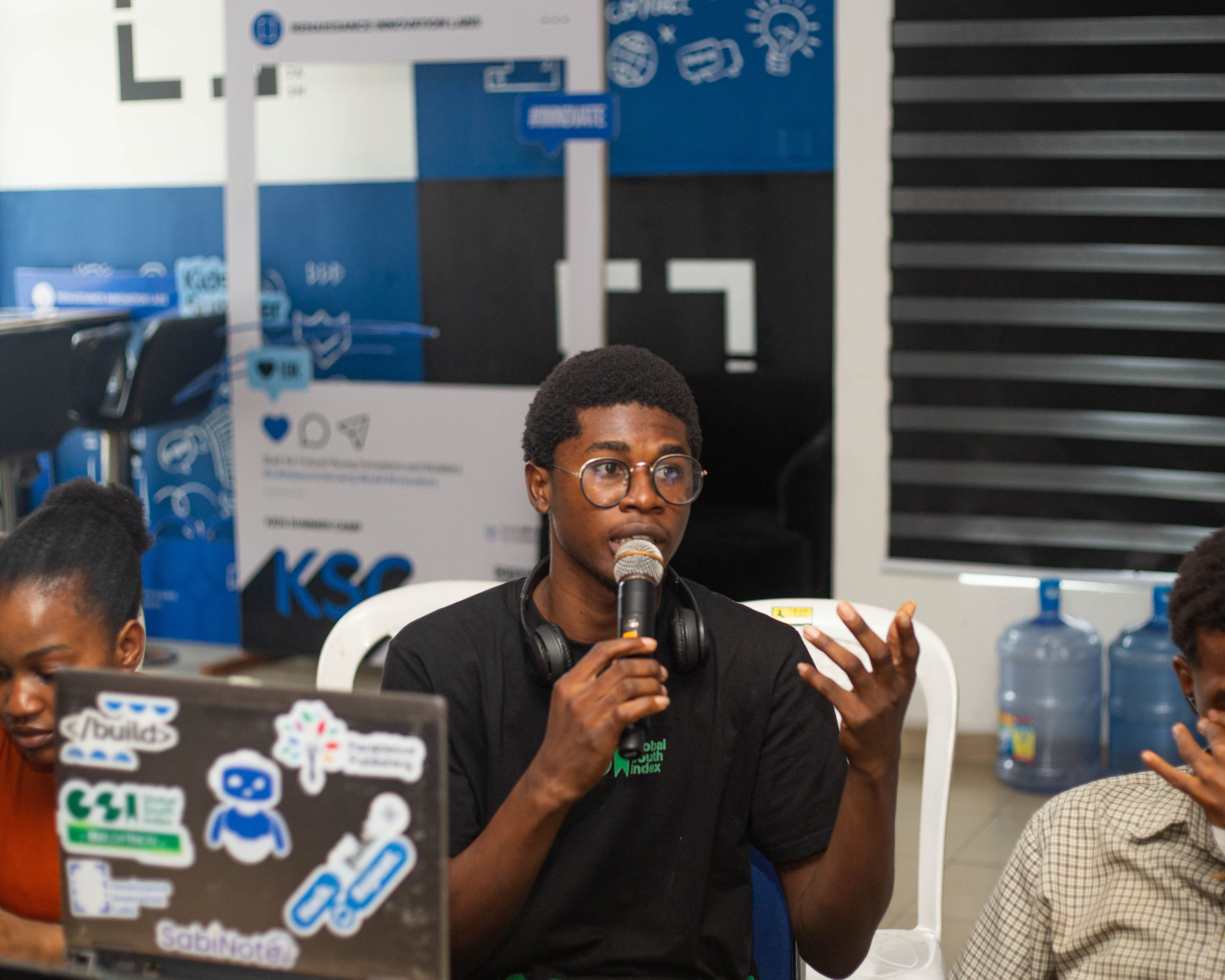
That question sat at the heart of Renaissance Innovation Lab's August Innovation Workshop, held on Friday, August 28, 2026, under the theme "Vertical AI: Building Agents for Real Industries." Rather than treating AI as another technology to learn in theory, the workshop challenged participants to think about it in the context of specific industries, users, workflows, and problems, then build solutions around them. By the end of the day, 49 participants had formed eight teams and built eight different AI-powered solutions.
That's where the real lesson began.
AI is not the problem. Knowing what to build is.
The AI ecosystem moves fast. New models, tools, agents, frameworks, and platforms appear almost every week, and with so many possibilities, it's easy to start with the technology itself: "What can we build with this?" But innovation rarely starts there. It starts with a problem.
At the August workshop, participants were introduced to Vertical AI: the idea of designing AI solutions around the specific needs, workflows, and challenges of a particular industry. A general-purpose AI system may be able to do many things. A vertical AI solution is designed to do something meaningful within a particular context. The difference isn't just technical, it's about understanding the environment the technology will operate in: who the user is, what problem they're facing, how it's currently being handled, where the workflow breaks down, and where AI can actually create value.
From learning about AI to building with it
The workshop moved participants through a deliberate, practical progression. The day began with sessions on understanding Vertical AI and designing industry-specific solutions, before participants transitioned into the Innovation Challenge. Edward Ndiyo led sessions on Understanding Vertical AI and Designing a Vertical AI Solution, helping participants think through problems, users, use cases, workflows, and opportunities for AI-powered automation.
David Aroh then brought an equally important, different perspective during The Reality of AI session, because understanding what AI can do is only half the equation. Builders also need to understand what it cannot reliably do. The session covered hallucinations, context limitations, inconsistent outputs, deepfakes, misinformation, AI-washing, security and privacy risks, prompt injection, and data leakage. The message was clear: AI is powerful, but it isn't infallible. Building useful AI products means knowing where the technology creates genuine value, and where human judgment, verification, and oversight remain essential.
The three-hour test
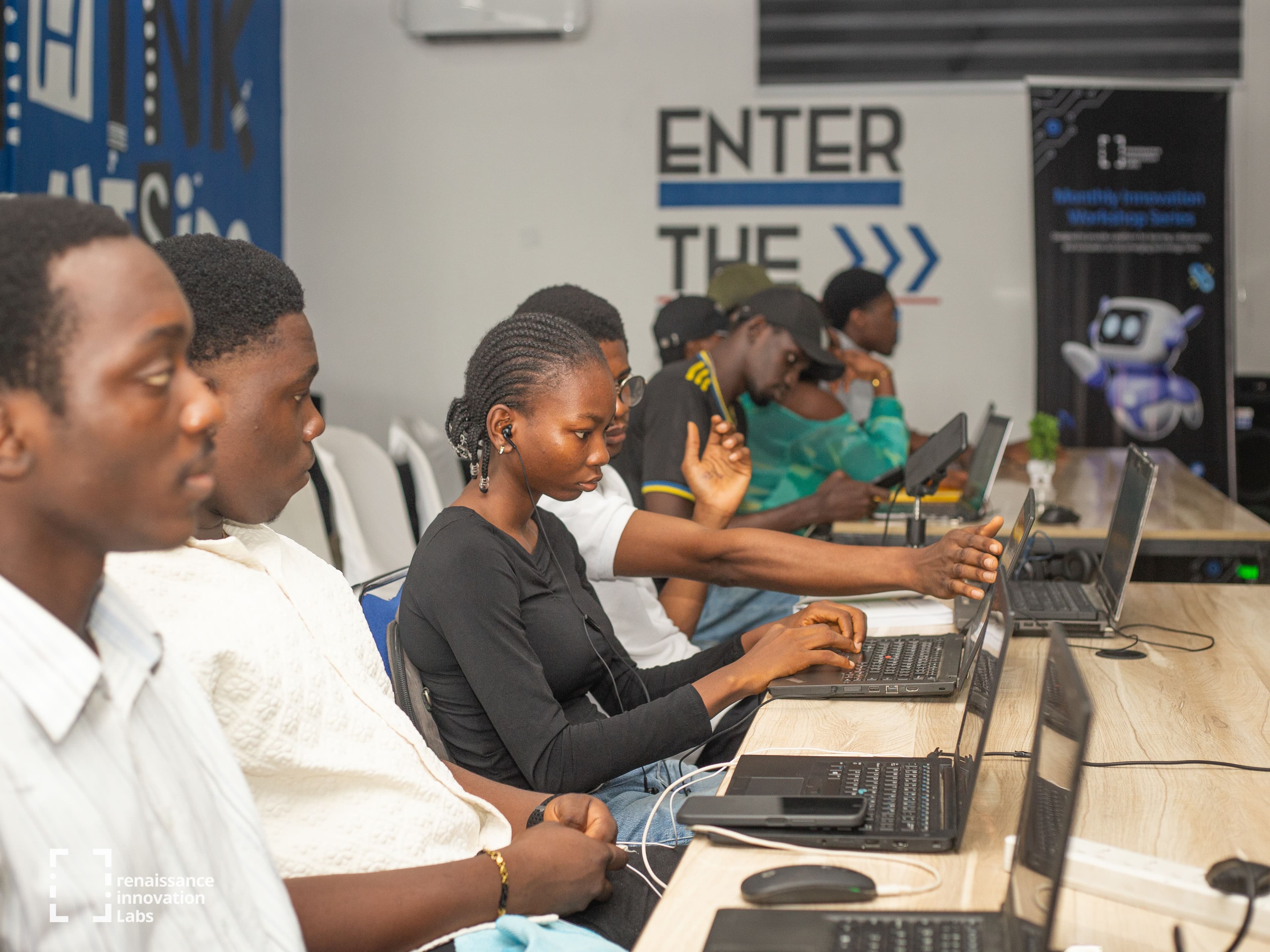
Then came the real challenge. Forty-nine participants were divided into eight teams and assigned industry contexts through a digital spin-wheel activity, covering sectors including healthcare, real estate, agriculture, education, financial services, logistics, manufacturing, retail, public services, and SME productivity.
The random assignment was intentional. Participants couldn't simply build what they already knew. They had to understand a new context quickly, identify a problem, define a potential user, design a workflow, determine where AI could add value, and build a prototype, all within roughly three hours. It's the difference between consuming technology and creating with it. By the end of the build sprint, all eight teams had successfully developed and demonstrated their solutions.
Eight teams, eight different problems
The projects that emerged showed how differently AI can be applied when the focus moves from the technology to the problem.
- Ovunda approached real estate as an AI consulting problem, helping buyers, sellers, and investors research properties, analyse prices, locations, potential returns, and risks, and receive recommendations.
- Flow IQ focused on small and medium-sized businesses, combining inventory management, automated ordering, customer enquiries, orders, and invoicing into a single workflow.
- Verify NG explored AI for institutional information collection, documentation, and fact-checking for corporations and government bodies.
- RoboDoc explored an approach to applying AI to patient support and healthcare access.
- MediGuard was designed to interact with patients, gather symptom information, generate a summary, and communicate relevant details to a registered hospital or medical professional.
- StockPilot AI tackled inventory management for small and medium-sized retailers, analysing product levels and sales rates to identify low-stock items, predict reorder requirements, recommend purchasing quantities, and generate supplier order messages, with a human approval step before any message is sent.
- DaVinci explored a more technical application of agentic AI, built to support engineers in designing, prototyping, and verifying physical systems, with an electronics workflow that integrates with KiCad to work directly with schematics and PCB layouts.
- Team 8 rounded out the challenge with a solution of their own, one of eight distinct approaches to the same three-hour build sprint.
There's no single way to build Vertical AI. The opportunity exists wherever there are complex workflows, repetitive processes, information bottlenecks, or decisions that intelligent systems can improve.
The winning idea: solve a clear problem
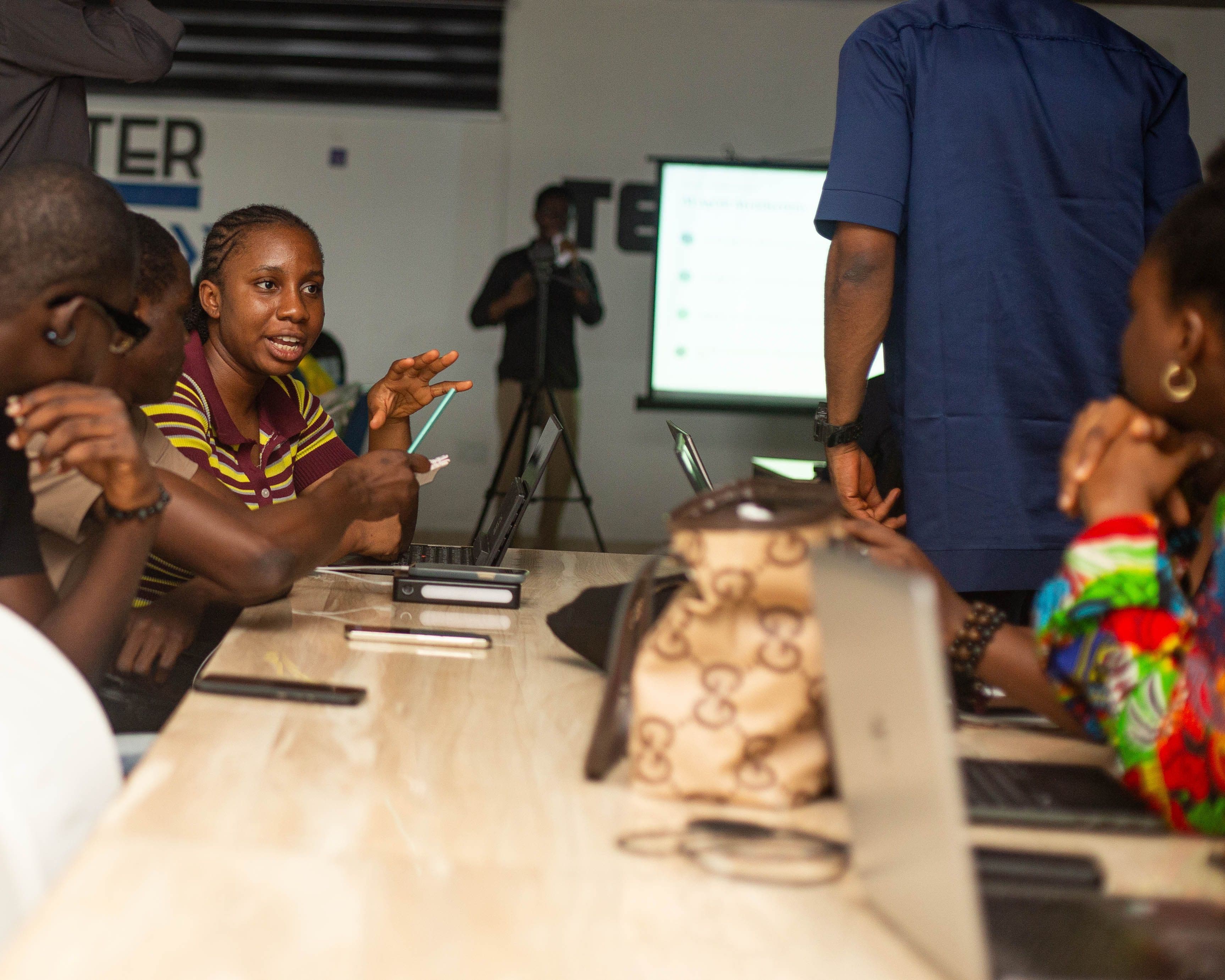
After the build sprint, each team presented to a judging panel of Caleb Duff, Faith Pueneh, Edward Ndiyo, and David Aroh. Projects were evaluated on:
- Problem relevance
- Innovation
- Meaningful use of AI
- Functionality
- Industry applicability
- Impact
- Scalability
- Presentation
Team 7's StockPilot AI won the Vertical AI Innovation Challenge and took home a cash prize. Its success came down to addressing a recognisable business problem and demonstrating a practical way AI and automation could solve it. In an environment where it's increasingly easy to attach AI to almost anything, the strongest products don't always have the most sophisticated technology behind them. Often, they're simply the ones that understand the problem best.
Building AI for the real world
Another lesson ran throughout the workshop: building useful AI requires more than technical ability, it requires context. An AI solution for healthcare can't be designed the same way as one for retail. An engineering agent has different requirements from a customer-service assistant. A tool built for a Nigerian SME operates within a different economic and infrastructural reality than one designed for a large multinational.
This is one reason Vertical AI is becoming such an important conversation. The future of AI may not simply belong to increasingly general systems. It may also belong to systems that understand specific environments deeply: the industries, the workflows, the users, the constraints, the language, the risks, and the problems.
From prototype to possibility
The most important outcome of the workshop wasn't the competition itself, it was what happened after the ideas became tangible. Before the build sprint, participants had concepts. A few hours later, there were working demonstrations. That transformation is at the centre of what practical innovation should look like. A workshop shouldn't end with participants knowing more terminology. It should leave them with something they can test, question, and improve.
RIL has identified StockPilot AI and DaVinci as promising solutions for potential further development and scaling, with plans to explore continued mentorship, refinement, ecosystem connections, and opportunities for these teams to move beyond prototypes.
That's where the workshop ends, and the building begins.
The bigger lesson
The August Innovation Workshop reinforced a simple idea: the future will be shaped by the people who understand where AI can create meaningful value, not just the people who know it exists.
AI gives us increasingly powerful tools, but tools alone don't create innovation. Problems do. The people who experience those problems do. The builders who take the time to understand them do. The real question is no longer "Can we build this with AI?" It's "Who needs this, what problem does it solve, and why is AI the right way to solve it?"
That's the shift from AI experimentation to AI innovation. At Renaissance Innovation Lab, the August workshop was one step in that direction, bringing people together to learn, question, build, test, and demonstrate what becomes possible when emerging technology is connected to real-world problems.
The prototypes were built in a few hours. The bigger opportunity is what happens next.
Want to be part of the next build? Join us for the next Monthly Innovation Workshop Series on Friday, October 30, 2026, and see what you can create when you show up ready to solve real problems. Come ready to build.