The Real Limiting Factors Holding Young Nigerians Back From Tech, And How to Beat Them Anyway
Power cuts mid-tutorial. Data that costs too much. No one nearby who's done it before. Here is what is actually standing between young Nigerians and a career in tech, and how a new generation is building anyway.
Jul 23, 2026·8 min read
 8 min read
It is past midnight, and the light just went out again.
Somewhere in Port Harcourt, a 19 year old is sitting in the dark with a phone at 12 percent battery, trying to finish a YouTube tutorial on Python before the data bundle runs out too. This is not a rare story. It is closer to the default starting point for thousands of young Nigerians who want to build a life in tech, in robotics, in AI, in the kind of innovation that feels like it belongs to people somewhere else.
The dream is not the problem. The dream is everywhere. Walk into any university computer science class, any WhatsApp group of self-taught developers, any Twitter Spaces about AI, and you will find no shortage of ambition. What is actually in short supply is the environment to turn that ambition into something real. That gap, between wanting it and being able to build it, is what this is really about.
This is not a piece written to complain about the country. It is written because pretending the barriers are not there does not help anyone walking into a robotics lab for the first time, wondering if the frustration they feel is normal, or a sign they picked the wrong path. It is both real and survivable, and the rest of this is about exactly how.
The Power Problem Nobody Outgrows
Start with the most obvious one, because it never really goes away no matter how far along you get. Electricity in Nigeria is still unreliable enough that even established tech hubs and companies budget for generators and backup power as a basic cost of doing business, not a luxury. For an individual learning alone at home, without a company covering diesel costs, an unstable power supply does not just slow you down. It resets you. A four hour coding session becomes forty minutes before the light goes, and whatever momentum you had goes with it.
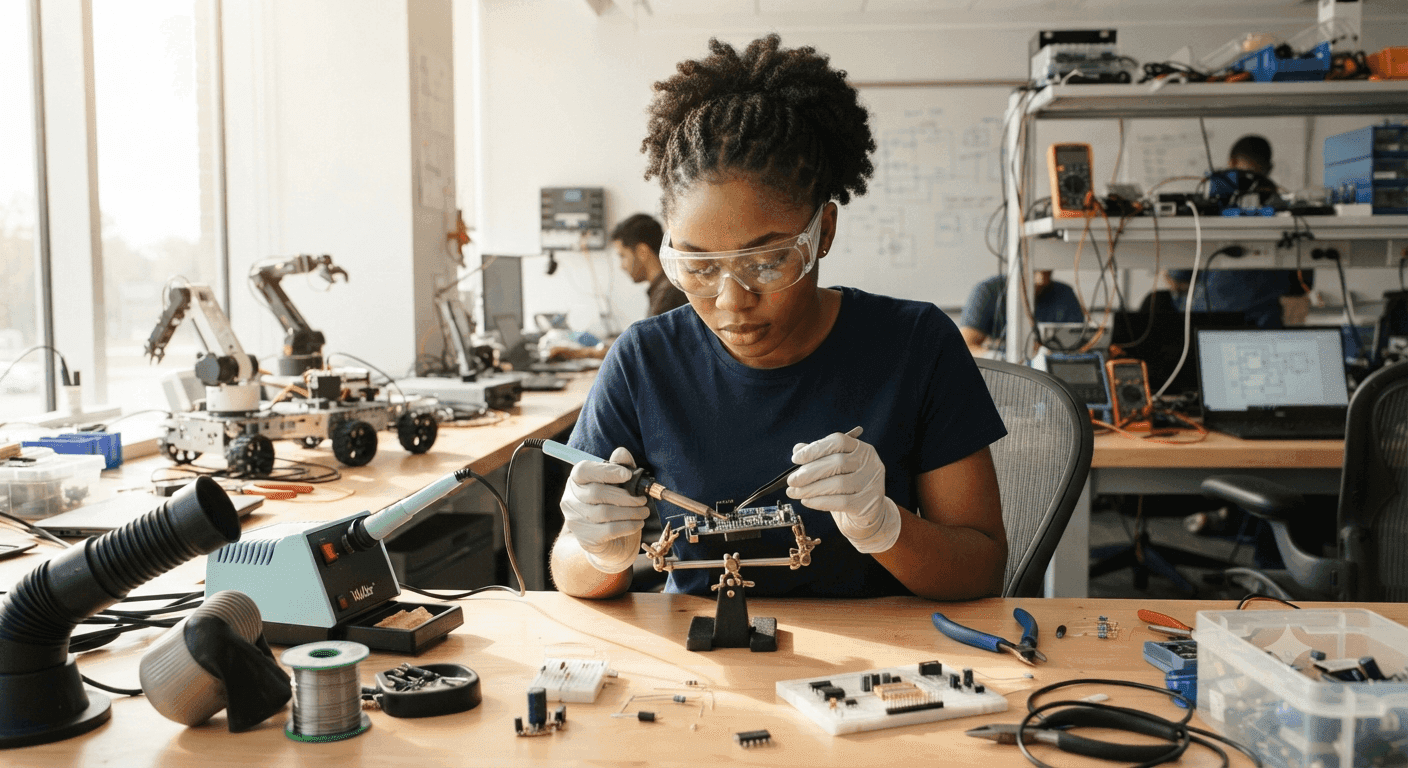
Robotics and hardware work make this worse than pure software work. You cannot practice soldering, testing a circuit, or running a robotics kit through its paces on a phone with a shrinking battery. A microcontroller project that needs to stay powered for a multi-hour test run simply cannot happen in a home where power comes and goes on no fixed schedule. This kind of learning needs a stable bench, stable power, and equipment that most individuals simply cannot afford to own alone, and it is precisely the kind of tech, robotics, hardware, physical building, that is hit hardest by an unreliable grid.
The Cost of Simply Being Online
Nigeria has made real progress on internet infrastructure over the last several years, but reliable connectivity has not translated into affordable connectivity for most young people. Data costs remain high relative to income, broadband penetration still falls short of national targets, and rural areas in particular remain far behind cities in both electricity access and network coverage. For someone trying to learn machine learning, watch robotics tutorials, or push code to GitHub, a spotty and expensive connection is not an inconvenience. It is a wall.
Consider what a serious tech education actually requires online now. Video tutorials, cloud-based coding environments, downloading datasets for a machine learning project, joining a video call with a mentor or a study group, submitting an assignment on a platform that was not built with unstable connections in mind. Each of these assumes a baseline of connectivity that is genuinely not guaranteed for a large share of young Nigerians, and every failed upload or dropped call is not just annoying, it is a small tax on ambition that a lot of people simply cannot keep paying indefinitely.
Add to that the price of the hardware itself. A functional laptop, the baseline requirement for almost any serious tech skill, costs more than many young Nigerians earn in months, if they are earning at all. Robotics kits, sensors, and microcontrollers cost even more, and are often only available through international shipping that adds further delay, customs complications, and expense on top of an already steep price tag. It is entirely possible to have the aptitude, the discipline, and the drive to become an excellent robotics engineer, and still be stopped cold by the simple fact that the starter kit costs more than a month's rent.
Nobody Told You It Was Possible
The quieter barrier, the one that does not show up in any infrastructure report, is simply not knowing anyone who has done it. Mentorship access in Nigerian tech is deeply uneven. In Lagos or Abuja, it is at least possible to find a meetup, a hub, a senior developer willing to answer questions over a weekend. In smaller cities and towns, that same young person might be the first person in their entire network attempting this path, with no one to ask when they get stuck, and no one to confirm that the frustration they are feeling is normal rather than a sign they do not belong here.
This matters more than it sounds like it should. Technical problems are rarely the real barrier for a beginner, everyone gets stuck on a bug, a broken circuit, a confusing concept. The real barrier is what happens next when there is no one to ask. Without mentorship, a solvable ten minute problem can turn into a demoralizing week long stall, and enough of those stalls in a row is what actually convinces smart, capable people that maybe this path just is not for them, when the truth is they simply lacked someone five minutes away who had already solved it once before.
This hits differently depending on who you are. For young women specifically trying to enter robotics and hardware fields in particular, the absence of visible role models compounds the isolation. It is one thing to struggle with a technical concept. It is another to struggle with it while quietly wondering if people who look like you actually succeed in this space at all, and whether the room you are sitting in was really built with you in mind. Representation is not a soft, symbolic issue here, it is the difference between a young woman assuming a hard week is normal, versus assuming it means she does not belong.
The Family Conversation
Then there is the conversation that happens at home. Many Nigerian families, often for good and understandable reasons rooted in real economic uncertainty, push their children toward established, respected career paths, medicine, law, traditional engineering, over something that still reads to an older generation as a hobby or a gamble. This is not usually cruelty or a failure to believe in their child. It is often a parent who watched real hardship and wants a guaranteed, recognizable outcome for their child rather than something newer and harder to explain at family gatherings.
A young person choosing robotics or AI over a more conventional path is often choosing it while managing real family pressure and real doubt from people whose approval matters to them, sometimes while still living under their roof, dependent on their support, unable to fully commit time and resources to a path the household does not yet trust. That tension, wanting to build the future while still needing to justify it to the people who raised you, is exhausting in a way that rarely gets named directly.
What Is Actually Working
None of this is meant to be discouraging. It is meant to be honest, because the young Nigerians actually succeeding in this space right now are not succeeding because these barriers disappeared. They are succeeding because they found specific, practical ways around them, not by waiting for the environment to change, but by changing how they approached it.
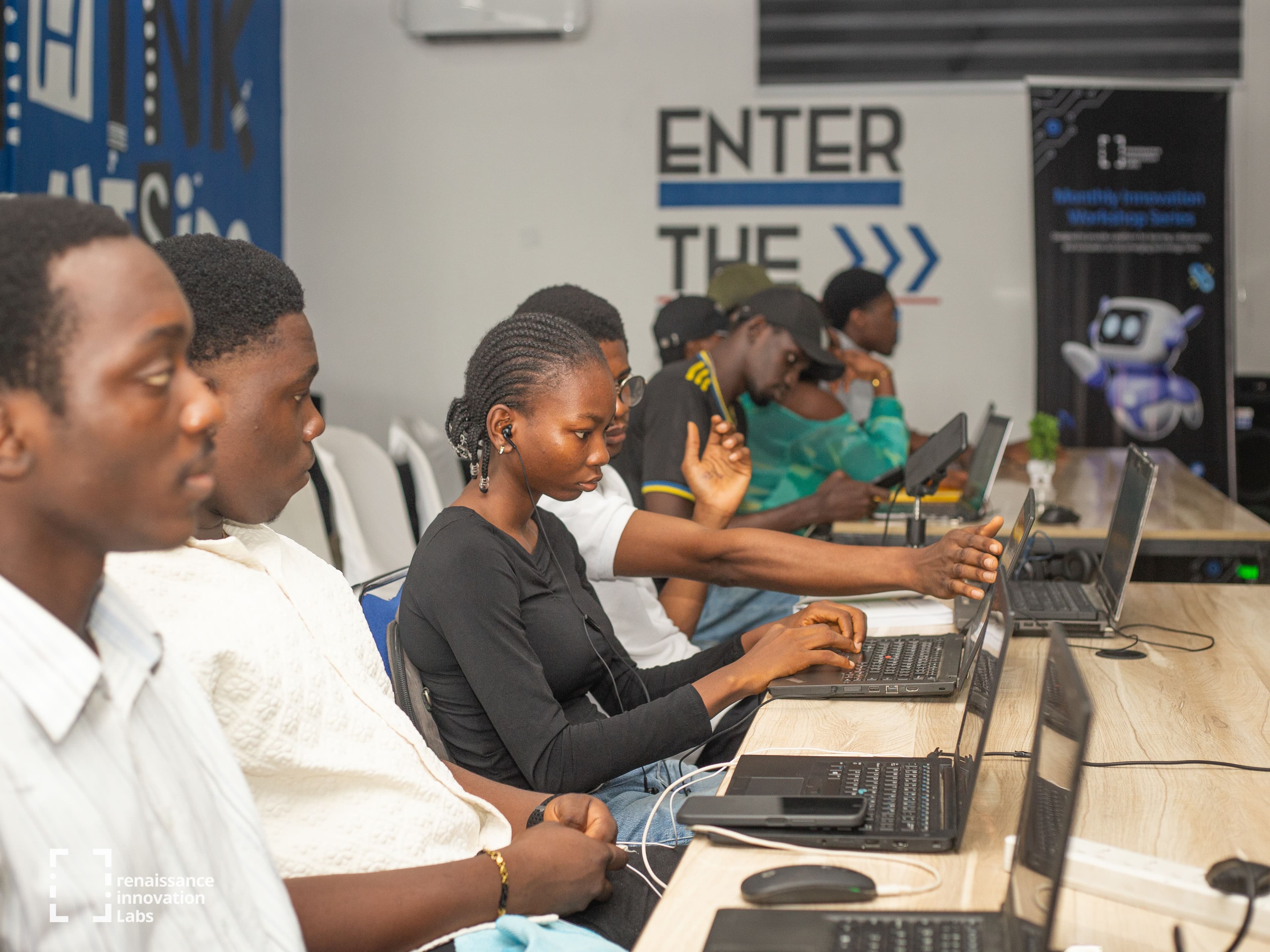
The single biggest shift has been the rise of shared spaces built specifically to absorb these costs collectively. A hub with stable power, working internet, and real equipment turns five individual impossible problems into one shared, solvable one. Someone who could never afford a laptop, a stable power source, and a robotics kit on their own can walk into a space where all three already exist, and simply show up. The cost of access gets spread across a community instead of sitting entirely on one person's shoulders, and that alone changes what is possible for people who were never going to solve the power and equipment problem alone.
The second shift is a change in mindset around starting. The young builders actually shipping real products are not waiting for perfect conditions. They are building small, imperfect versions of their ideas with whatever access they have in a given week, and improving from there. A working prototype built during three good hours of power is worth more than a perfect plan that never gets attempted because the conditions were never ideal enough. This shows up constantly among builders who ship real, working products out of limited access rather than waiting for circumstances to improve first.
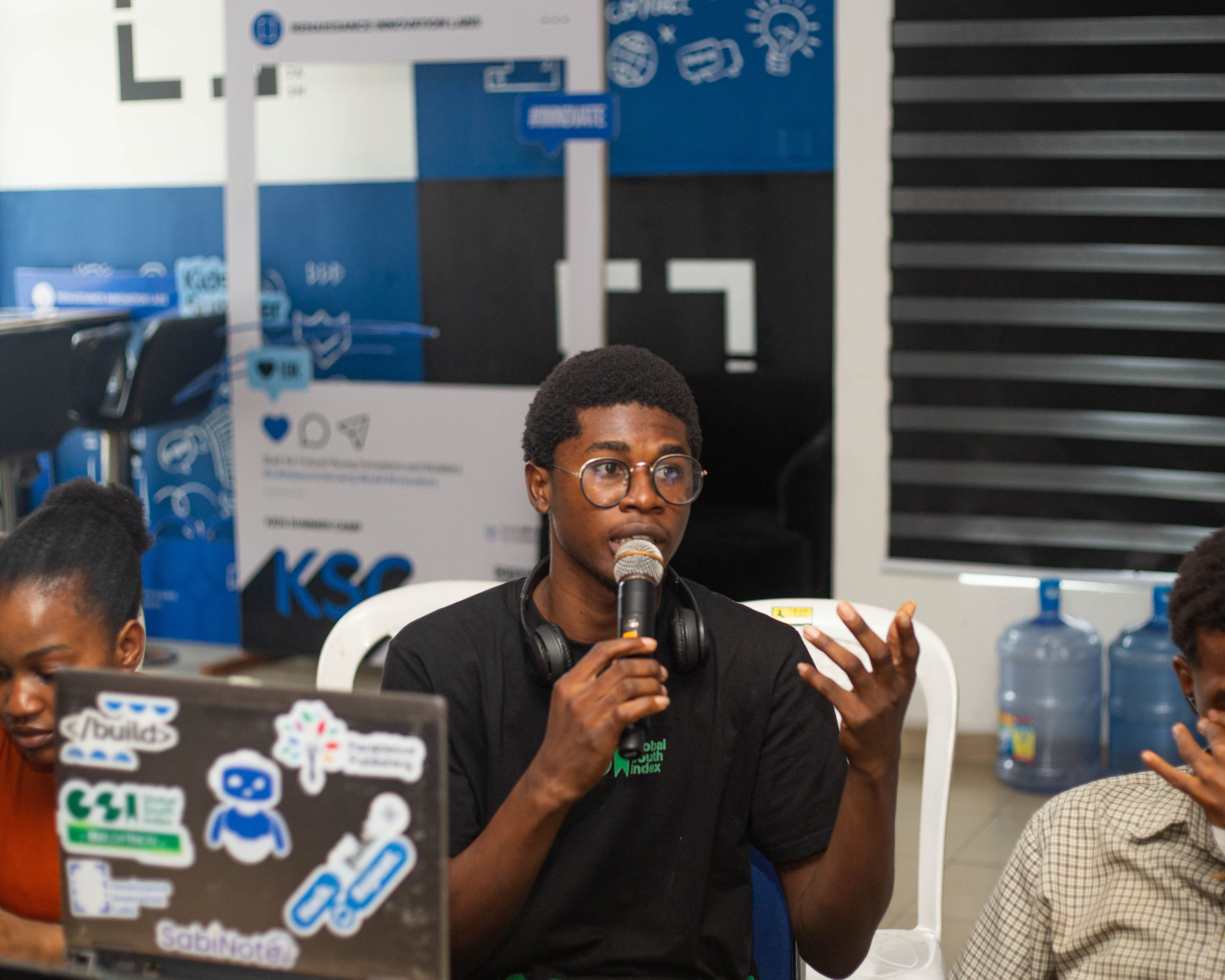
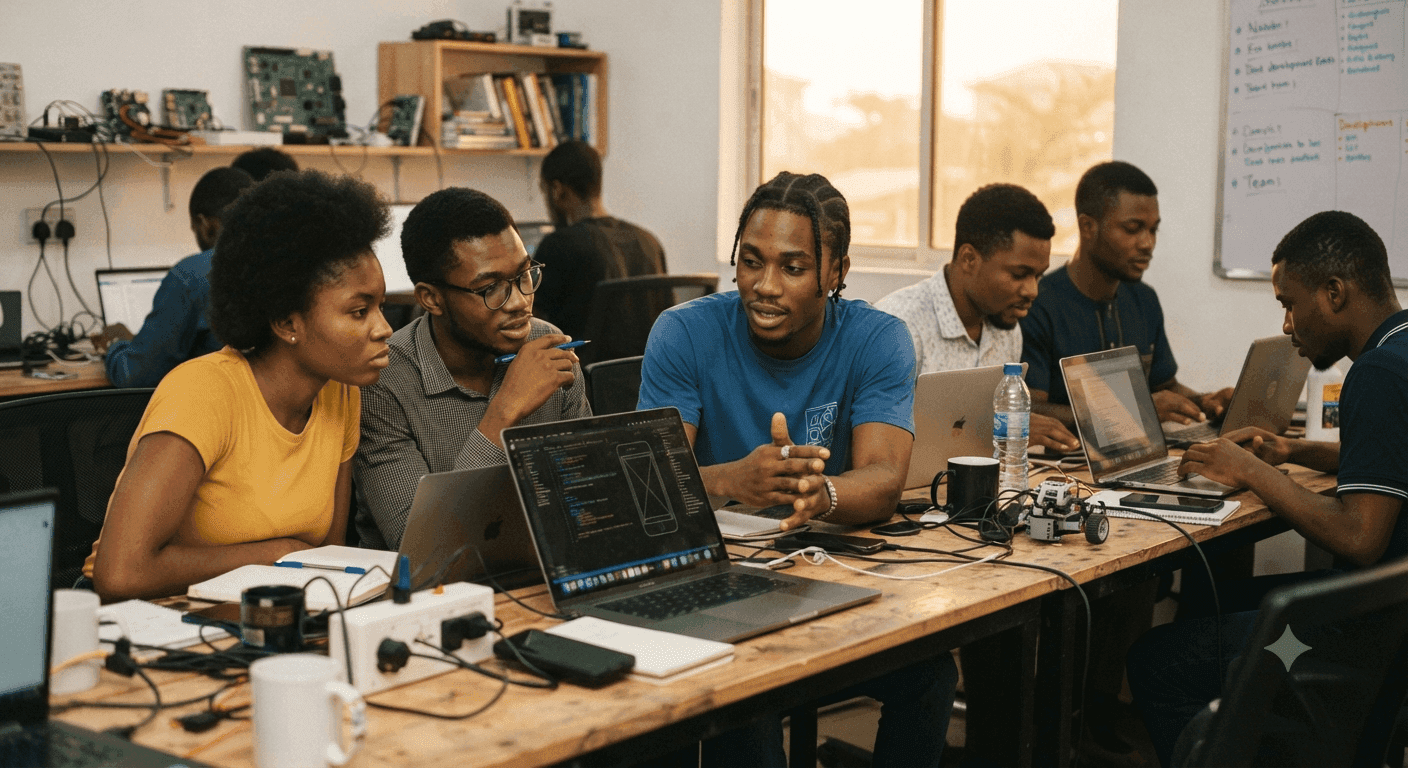
The third, and maybe most important, is proximity to other people doing the same thing. Being in a room, physical or virtual, with other young Nigerians actively building closes the mentorship gap in a way that no amount of online tutorials can replace on their own. It turns isolation into community, and it turns self-doubt into something survivable, because you are watching other people exactly like you push through the same walls, hit the same bugs, and keep going anyway. That visible proof, someone who looks like you, sounds like you, grew up near you, actually building this, does more for confidence than any amount of encouragement from a stranger online ever could.
The Point
Every one of these barriers is real. Power, cost, mentorship, family pressure, none of it is exaggerated, and none of it should be waved away with empty encouragement telling someone to simply work harder. But none of it is permanent either, and it is not being solved by waiting for the country's infrastructure to fix itself first. It is being solved, slowly and unevenly, by young people building shared solutions to individual problems, and by communities choosing to absorb the cost of access so that ambition alone is enough to start.
At Renaissance Innovation Labs, this is the gap the space exists to close, shared equipment, shared power, shared mentorship, so that the only real requirement left is showing up. It is not the whole solution to a national problem. It is proof the problem is solvable at all, one young builder at a time.