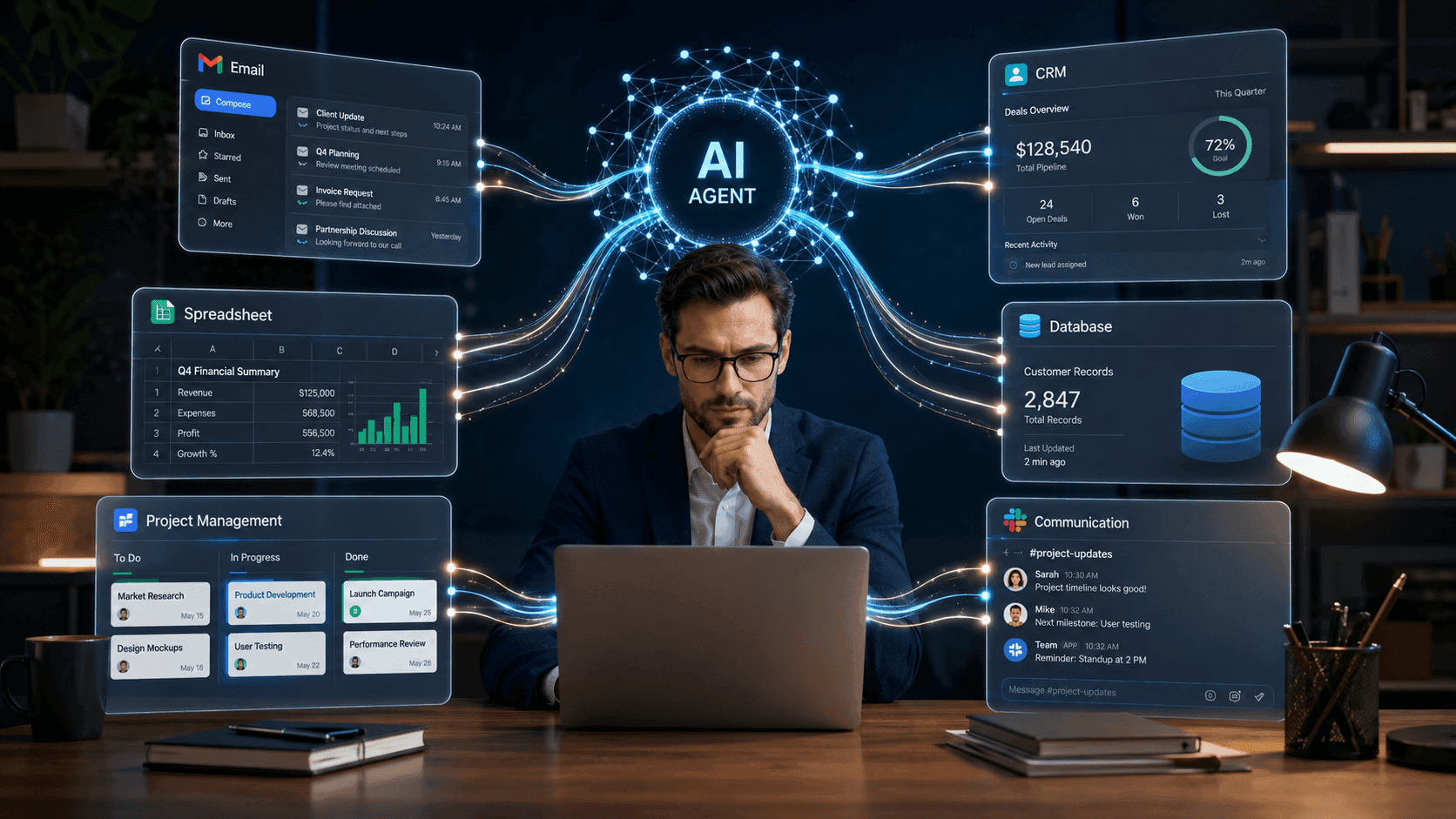
Why Vertical AI Could Be Africa’s Next Big Opportunity
The biggest AI opportunity in Africa may not be building another general-purpose model. It may be building artificial intelligence [AI] that understands our problems better than anyone else.
Aug 21, 2026·8 min read
 8 min read
For the past few years, much of the conversation around artificial intelligence [AI] has revolved around one question: "Who Is Building the Biggest and Smartest AI Model?"
The competition has been dominated by companies with billions of dollars in capital, enormous computing infrastructure, massive datasets, and access to some of the world's best technical talent. For African companies, competing directly in that race is difficult.
But perhaps that is the wrong race to enter. The next major opportunity in African AI may not be in building another system that can answer almost any question. It may be in building systems that can solve one category of problems exceptionally well. That is where Vertical AI comes in.
So, What Exactly Is Vertical AI?
Vertical AI refers to artificial intelligence designed specifically for a particular industry, profession, business function, or workflow. Instead of building an AI system that tries to be useful to everyone, you build one that understands a particular environment deeply.
Think about the difference between a general-purpose assistant and a healthcare AI system. A general AI model might be able to explain a medical term, summarize a document, or answer questions about diseases. A vertical healthcare AI system could go much further. It could be designed around:
- Clinical workflows
- Medical terminology
- Patient records
- Local healthcare protocols
- Regulatory requirements
- The day-to-day realities of healthcare professionals
The same principle could apply to banking, agriculture, education, logistics, energy, manufacturing, legal services, and public administration.
Vertical AI is not simply AI that knows more. It is AI that understands a particular world.
That distinction could become extremely important for Africa.
Why Specialization Matters
General-purpose AI is powerful precisely because it is general. But generality can also create limitations. A model trained to serve billions of people across different countries and industries cannot automatically understand every local workflow, regulatory environment, language, cultural context, infrastructure constraint, or business practice.
Vertical AI takes the opposite approach. It starts with the problem:
- What does a doctor need to do every day?
- How does a farmer make decisions about crops?
- How does a bank assess risk?
- How does a logistics company manage deliveries across difficult terrain?
- How does a government process thousands of documents?
Once the problem is clearly defined, AI can be built around the workflow. That means the opportunity is not necessarily to create a more intelligent general-purpose model. It is to create more useful intelligence for a specific environment. And Africa has plenty of environments that remain poorly served by existing technology.
Africa's Problems Are Not Generic
This is perhaps the most important part of the opportunity. Africa is not a single market, and African problems are rarely identical to problems elsewhere. Businesses operate within different infrastructure realities. Consumers behave differently. Markets are often fragmented. Connectivity can vary dramatically. Power availability can affect how businesses operate. Many industries still depend heavily on informal processes.
And perhaps most importantly, Africa is home to thousands of languages and cultural contexts that have historically received far less representation in digital technologies. The Organisation for Economic Co-operation and Development [OECD] notes that African languages and contexts remain underrepresented in the training data of many commercially available AI systems. At the same time, it highlights opportunities for locally developed AI in areas such as agriculture, healthcare, public administration and education.
This creates an interesting possibility: the things that make African markets difficult to serve may also be the things that make them valuable places to build specialized AI.
Imagine What This Could Look Like
1. Healthcare
A vertical AI system could help healthcare workers with documentation, patient triage, medical information retrieval, or administrative workflows. But the real opportunity comes from building it around the realities of the healthcare system where it will actually be used.
2. Agriculture
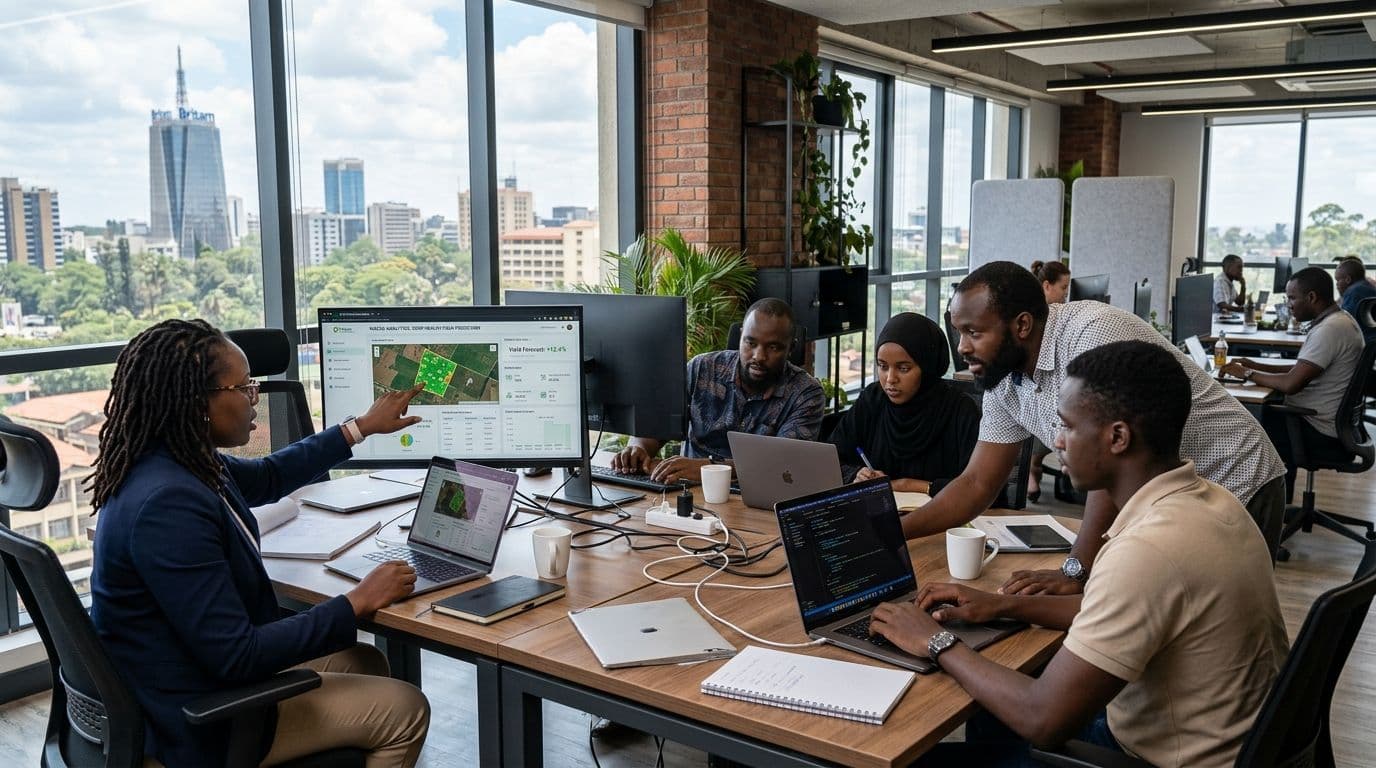
Instead of simply asking an AI model "How do I grow maize?" imagine an agricultural AI system that understands local soil conditions, crop cycles, weather patterns, regional farming practices, available inputs, market prices, and local languages. That is a very different product. And the difference is not necessarily the underlying AI model. It is the context surrounding the model.
3. Financial Services
Africa has already demonstrated how quickly financial technology can evolve when products are designed around local realities. Vertical AI could support fraud detection, credit assessment, customer service, compliance, financial education, and risk management—particularly where conventional systems struggle with fragmented or alternative forms of financial data.
4. Education
An education-focused AI could go beyond answering students' questions. It could adapt to local curricula, learning environments, teacher workflows, examination systems, and local languages. The goal would not simply be to create an AI tutor. It would be to create an AI system that understands how education actually works in a particular environment.
5. Logistics
Moving goods across African markets can involve complex routes, infrastructure limitations, traffic patterns, customs processes, fuel considerations, and fragmented supply chains. A logistics-focused AI system could be built specifically around those challenges. Instead of giving generic optimization advice, it could understand the realities of moving goods from one African market to another.
6. Energy
Energy is another obvious opportunity. AI systems could help businesses and utilities predict demand, optimize energy consumption, monitor infrastructure, manage distributed energy systems, and identify maintenance needs. Again, the value comes from understanding the environment.
7. Manufacturing
Manufacturing AI could be built around equipment maintenance, quality control, inventory management, production planning, and supply-chain optimization.
8. Legal Services
Legal AI could be trained around specific jurisdictions, legal systems, regulations, case law, contracts, and compliance requirements. A legal AI that understands the laws of a particular jurisdiction may be far more useful to a local practitioner than a general system that simply knows "law."
9. Public Services
Perhaps one of the most significant opportunities lies in government. Imagine AI systems that can help citizens navigate public services, process government documents, translate information across languages, assist civil servants with administrative work, and make large amounts of public information easier to access. These are not futuristic problems. They are existing problems waiting for better tools.
The Real Advantage May Be Local Knowledge
This is where the conversation becomes particularly interesting. The AI race is often framed as a competition for models. But models are only one part of the equation. Vertical AI also depends on:
- Data
- Domain expertise
- Integrations
- Workflows
- Trust
- An understanding of the people using the system
And that creates an opening for African companies. A company that spends years understanding a particular African industry may develop something that a much larger technology company cannot easily reproduce from thousands of kilometres away. Not because the African company has a larger model. But because it understands the problem better. That knowledge can become a competitive advantage.
Africa Doesn't Have to Build Everything From Scratch
There is also an important misconception to avoid. Vertical AI does not necessarily mean Africa needs to build its own foundational model from the ground up. In many cases, companies can build specialized systems on top of existing foundation models.
The differentiation can come from what sits around the model:
- Proprietary or carefully curated domain data
- Local knowledge
- Industry-specific workflows
- Connections to existing business systems
- Local language capabilities
- Regulatory requirements
- Human oversight
- Evaluation systems designed around specific outcomes
The model may be the engine, but the vertical application is the vehicle.
And Africa does not necessarily need to manufacture the engine to build vehicles that solve uniquely African transportation problems.
There Is Already Evidence of the Broader Opportunity
The potential is not limited to theory. McKinsey & Company estimates that generative AI could create significant economic value across African industries, with opportunities spanning sectors including retail, telecommunications, energy, banking, logistics, education, agriculture and healthcare.
Meanwhile, the Global System for Mobile Communications Association [GSMA]'s 2026 work on African AI talent and ecosystems explicitly highlights areas such as agriculture, health, financial inclusion and local languages as priorities for African AI development.
The direction is becoming clearer: the question is increasingly not whether AI will affect African industries. It is: who will build the systems that understand those industries well enough to create lasting value?
But There Are Real Challenges
Vertical AI is not a shortcut. Africa still faces significant constraints around infrastructure, access to capital, computing capacity, data availability, and digital connectivity. The International Monetary Fund [IMF] recently highlighted unreliable electricity, limited broadband capacity, fragmented markets and financing constraints as important barriers to scaling AI across much of Sub-Saharan Africa. It also noted that many African languages remain underrepresented in digital datasets.
There is also the question of trust. AI deployed in healthcare, finance, legal services or government cannot simply be impressive. It needs to be reliable. It needs appropriate safeguards. It needs to know when to escalate a decision to a human. And it needs to operate within the laws and realities of the environment in which it is deployed.
That means building Vertical AI will require more than good engineers. It will require domain experts, policymakers, businesses, researchers and communities working together.
The Bigger Question
Perhaps the most important question is not "Can Africa Build an AI Agent?" The more interesting question is "What Kind of AI Agent Should Africa Build?"
Because there is a difference between building technology that happens to be used in Africa and building technology that was designed with African problems at its centre. For years, much of the continent's relationship with technology has been defined by consumption. Someone else builds the platform. Someone else builds the infrastructure. Someone else defines the product. We adapt it to our environment.
AI presents an opportunity to challenge that pattern. Africa may not need to win the race to build the world's largest foundation model. It may not need to compete dollar-for-dollar with the companies spending billions on computing infrastructure.
Instead, it can build something harder to ignore: AI that understands problems that the rest of the world may not be paying enough attention to. AI for a particular healthcare system. AI for a particular agricultural ecosystem. AI for a particular financial market. AI for a particular language. AI for a particular supply chain. AI for a particular public-service challenge.
That is the promise of Vertical AI. The biggest opportunity may not be making AI capable of doing everything. It may be making AI exceptionally good at doing the things that matter most to us.
And perhaps that is where Africa's AI story becomes much more than a story about catching up. It becomes a story about building something the rest of the world may eventually want to learn from.
The question is no longer whether Africa will consume AI built elsewhere. The question is whether Africa will build AI around problems the rest of the world has overlooked.