ZenFlow — David Aroh Builds Productivity and Wellness App | RIL Builders Directory
Most productivity apps are built for output. ZenFlow was built for the person producing the output. David Aroh built it because he lived the problem, and because nobody around him was talking about it.
Jul 17, 2026·6 min read
 6 min read
There is a type of exhaustion that does not show up in any productivity metric.
It is not the kind that comes from working too little. It is the kind that comes from working too much, for too long, without any system for recovering. You get things done. Your to-do list gets shorter. The work keeps moving. But slowly, without you fully noticing, the energy that used to come naturally starts to require effort. The ideas that used to arrive easily start arriving late. And the thing you are building, the career you are growing, the goals you are chasing, start to feel heavier than they used to.
Most productivity tools make this problem worse. They are designed entirely around output. More tasks, more streaks, more completion rates, more reminders to do things you have not done yet. They treat the human being using them as a machine that needs optimising, not a person who needs sustaining.
David Aroh built ZenFlow because he believed there was a better way. And because he needed one himself.
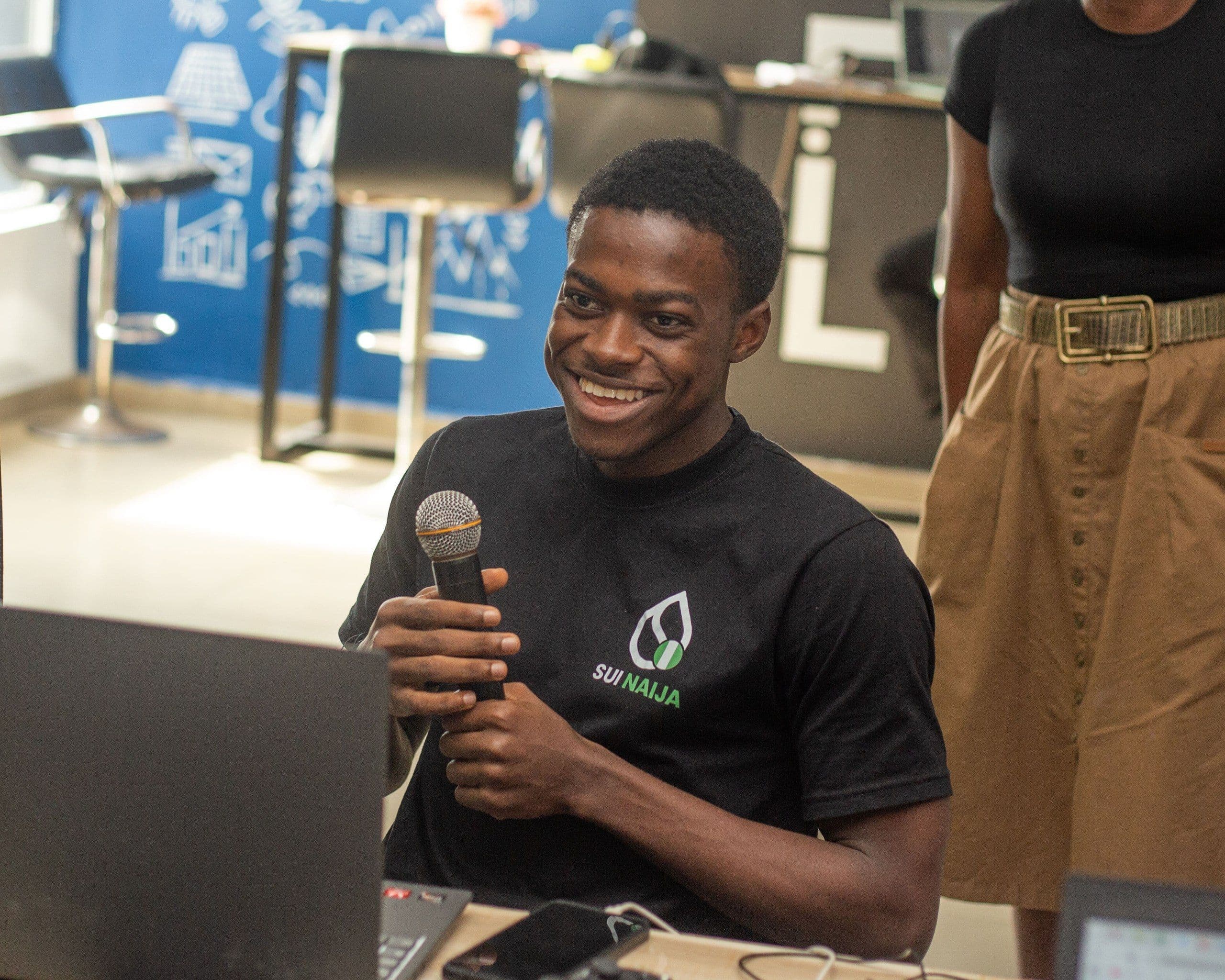
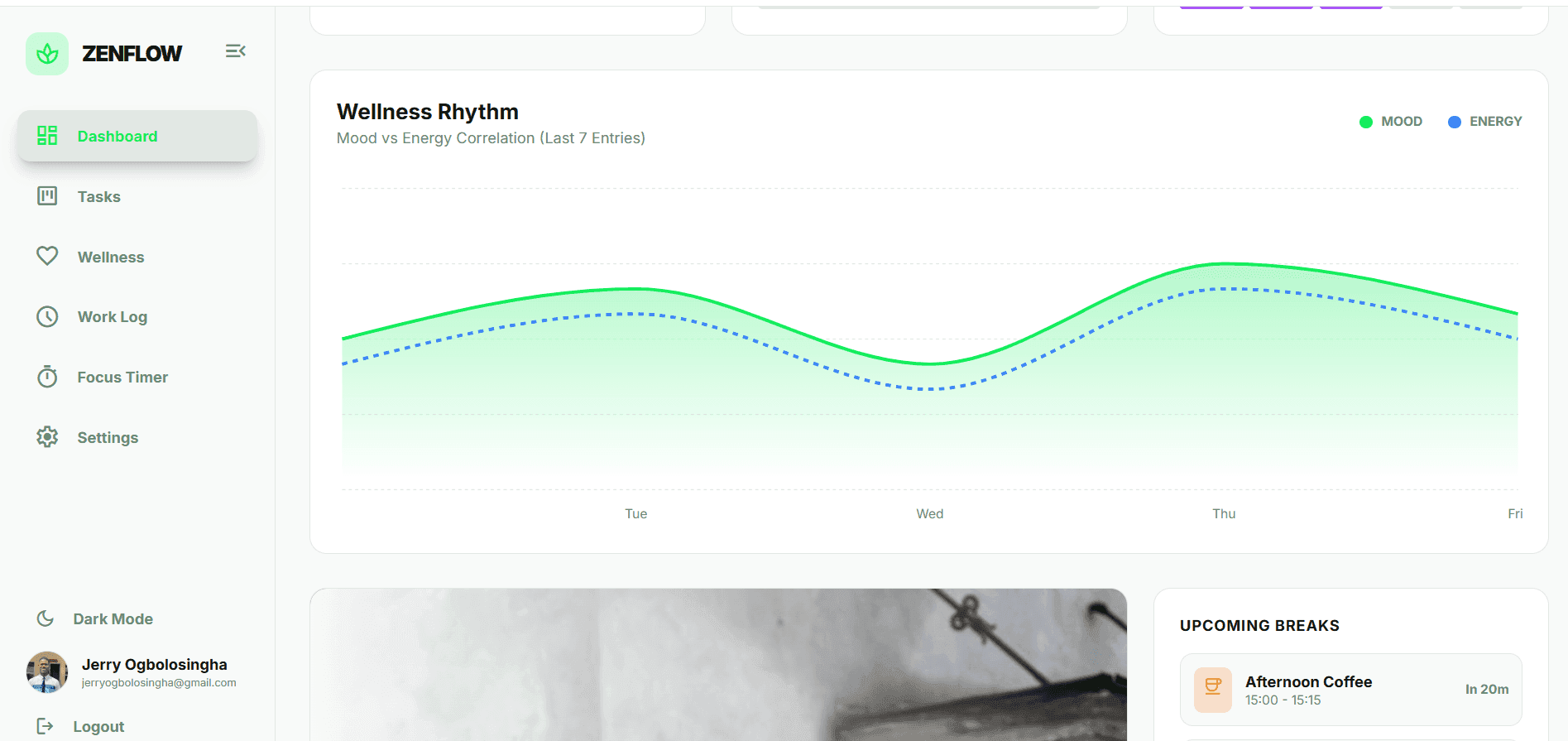
ZenFlow is a productivity and wellness application that treats output and recovery as inseparable. It is not a meditation app. It is not a to-do list. It sits in the space between those two things, designed for anyone who is doing a lot and needs a framework that respects both the ambition and the person carrying it.
The core insight behind ZenFlow is simple but underused in most productivity tools: you cannot sustain output without input. Rest is not the absence of productivity. Rest is what makes productivity possible the next day, and the day after that, and across the months and years that actually determine whether you get to where you are going.
The app gives users a structured way to plan their work, track their tasks, and build productive habits, while also building in deliberate prompts for rest, reflection, and recovery. It acknowledges that a productive day is not simply a day where you completed the most tasks. It is a day where you worked well, rested intentionally, and are ready to show up again tomorrow.
The design philosophy is calm without being passive. ZenFlow does not punish you for having a hard day. It does not greet you with a streak you have broken or a percentage you have fallen below. It helps you process the day you had, reset, and prepare for the one that is coming.
You can try it now at zenfloww.vercel.app.
Who ZenFlow Is For
ZenFlow was built for everyone who has ever felt the gap between how much they are doing and how well they are actually doing.
That is a wider group than most productivity apps acknowledge. It includes the student who is studying for exams while managing part-time work and family expectations. The entrepreneur who is building their business in the hours before and after their day job. The employee who takes their work home every evening and has stopped being able to tell where work ends and personal time begins. The freelancer who has no one telling them to stop, so they never do. The young professional who is ambitious enough to keep pushing but experienced enough to have noticed that the pushing is starting to cost them.
All of these people share something in common. They are not struggling because they are lazy or unproductive. They are struggling because nobody ever gave them a tool that treated their wellbeing as something that belongs inside the same system as their work, not separate from it, not something to return to when the work is finally done, but something that makes the work sustainable in the first place.
ZenFlow was built for them. All of them.
The Problem With How We Talk About Productivity
The dominant conversation about productivity, especially in the tech and entrepreneurship world, has a blind spot. It talks endlessly about systems for getting more done. It does not talk enough about systems for ensuring the person doing things does not run out of capacity.
There is a reason burnout has become one of the most commonly reported experiences among ambitious young professionals and students. It is not that people are not disciplined enough or do not want to succeed enough. It is that the tools and frameworks most widely available to them optimise relentlessly for output and treat recovery as optional, something to schedule if you can find the space for it, rather than as the engine that makes everything else run.
The research on this is not new or complicated. Humans are not designed for uninterrupted output. Cognitive performance, creativity, decision quality, and emotional regulation all decline measurably with insufficient rest and recovery. The people who sustain the highest quality of work over the longest periods of time are almost never the people who rest the least. They are the people who rest intentionally, who treat recovery as part of the work rather than a break from it.
ZenFlow was built on that understanding. It brings recovery into the productivity system rather than leaving it outside.
What the App Actually Does
Inside ZenFlow, users can plan their work across the day in a structured way that accounts for both what needs to be done and how much capacity they realistically have to do it. The task management system is designed to be used with intention rather than just loaded up with everything on your mind and abandoned when the list gets overwhelming.
The habit tracking feature helps users build the consistent behaviours that determine long-term outcomes. Not just work habits but the full range of practices that support sustained performance: sleep, movement, hydration, reflection, the things that most productivity apps treat as irrelevant to getting work done and that ZenFlow treats as central to it.
The recovery prompts embedded in the app are not generic reminders to take a break. They are contextual nudges that respond to how the user's day is going, encouraging the kind of deliberate rest and reflection that actually recharges rather than just interrupts.
The overall experience is clean, calm, and unintimidating. ZenFlow does not add to the noise of a busy day. It helps you cut through it, prioritise what actually matters, do it well, and recover properly so you can do it again.
Built With Honesty About the Problem
What makes ZenFlow worth paying attention to is that it was built by someone who lived the problem before they tried to solve it. David did not build a wellness app because he researched the market and identified a gap. He built it because he found himself in that gap and could not find what he needed already there.
That honesty about the origin of the product shapes the experience of using it. ZenFlow does not feel like a product that is trying to fix you. It feels like a product that understands you, because it was made by someone who needed the same thing you need and built it with that need in mind.
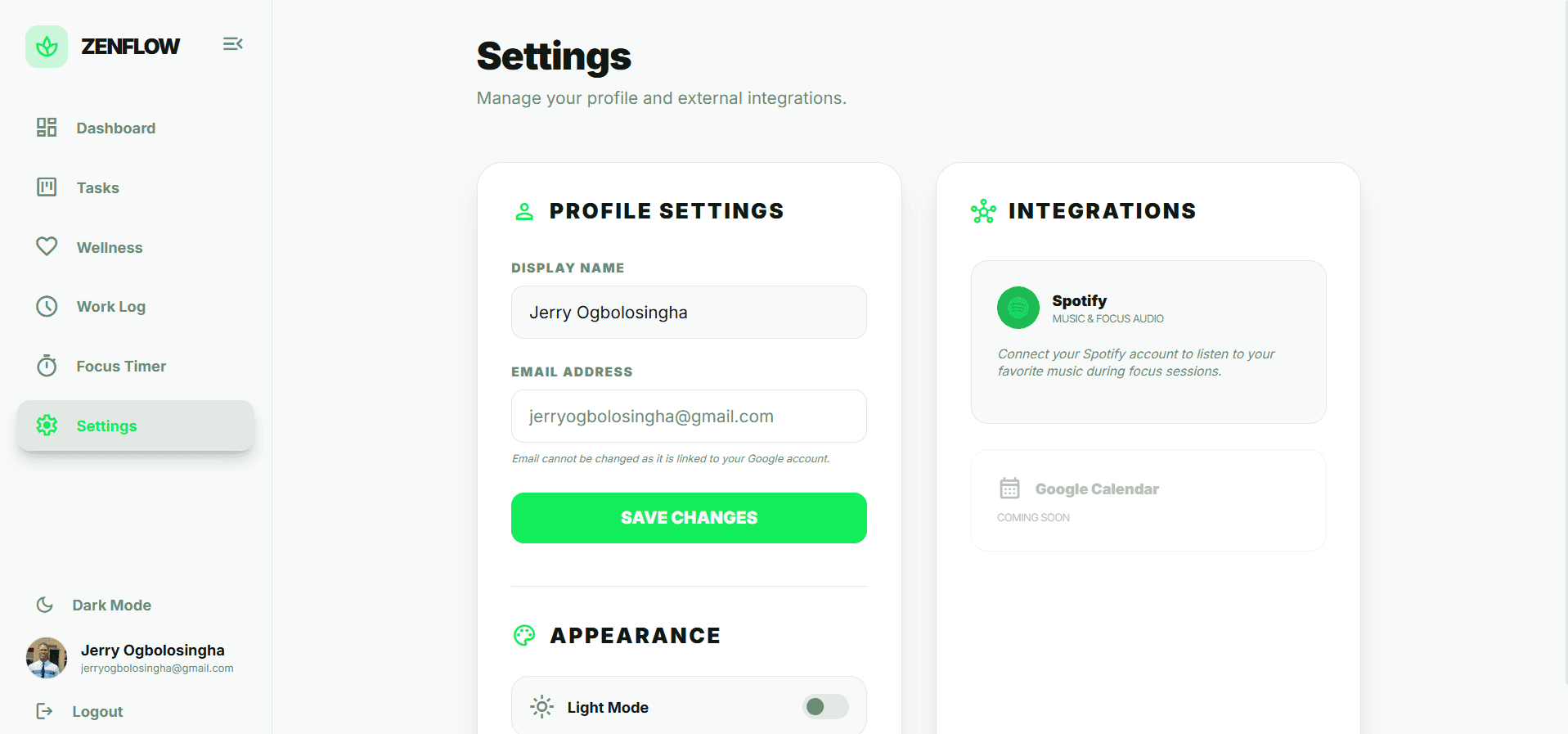
The specificity shows in every design decision. The app does not celebrate output at the expense of the person producing it. It does not reward you for grinding and penalise you for resting. It is built on the belief that you matter as much as your work does, and that the best version of your work comes from the best version of you.
Try It
ZenFlow is available now. If you are a student, a professional, a builder, a freelancer, or simply someone who has a lot going on and wants a tool that helps you manage it without burning out in the process, this was built for you.
Visitzenfloww.vercel.app and try it for yourself.
ZenFlow was built at Renaissance Innovation Labs in Port Harcourt, Nigeria. Want to build something that matters? Come and find your project at 19B Ada George Road, Port Harcourt.